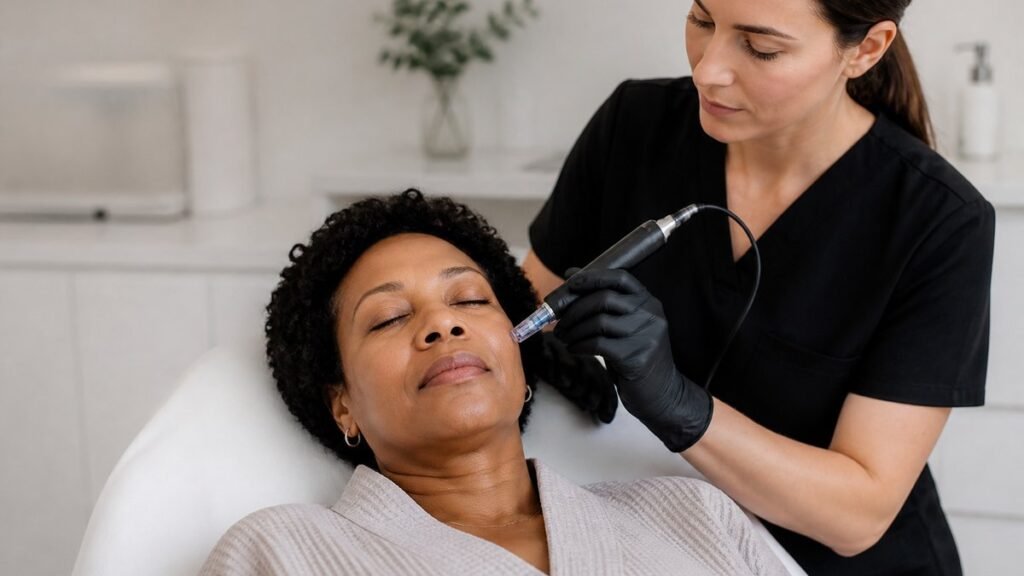
Microneedling is a minimally invasive skin treatment performed by a trained specialist. It creates controlled micro-injuries in the skin, and these injuries prompt a natural repair response. People often discuss this treatment for fine lines, acne scars, enlarged pores, or uneven texture. Since specialists perform it on the face, neck, chest, and other areas, discuss your target areas.
Collagen and Your Skin’s Response
Collagen gives skin its firmness, while elastin allows it to stretch and bounce back. Both proteins work together, and their balance affects how skin looks and feels. When skin detects the tiny
punctures, it starts a healing process. Your body treats each micro-channel as a minor wound, so it sends repair signals to the tissue. Skin type, age, and the concern being treated can all influence how the skin responds. Deeper scars or more advanced texture changes may require more sessions. Your specialist evaluates these factors before recommending a treatment plan.
Steps in a Typical Treatment
Your appointment begins with a cleansing of the treatment area to remove oils, makeup, and any residue. Tell your specialist about any medications, allergies, or active skin infections beforehand, and some conditions may require rescheduling. Once your skin is fully numbed, your specialist examines the treatment area to confirm it is ready.
They may mark zones that need closer attention, and they adjust their approach based on what they observe. This preparation step helps the session run smoothly, and it gives your specialist a clear starting point. The specialist then moves a hand-held device across your skin in a controlled pattern. The device has fine, sterile needles that create small, controlled channels in the skin’s surface.
Recovery After Your Session
Your skin may feel tight and look similar to a mild sunburn. Some people also notice light flaking or dryness as the skin sheds its surface layer. This is a normal part of the repair process. Avoid picking or rubbing the treated area, so you do not disrupt healing and increase the chance of irritation. To help your skin recover well, keep these steps in mind:
- Activity and heat: Skip makeup and heavy workouts for 24 hours, since the tiny channels are still open. Sweating can introduce bacteria, so choose light activity for the first 48 hours.
- Handling: Your skin may feel more sensitive than usual for several days. Avoid touching your face unnecessarily, and use clean hands when applying any products.
- Skincare products: Use a gentle, fragrance-free cleanser and moisturizer throughout recovery. Avoid retinoids, vitamin C serums, and exfoliating acids until your specialist confirms your skin has fully recovered, as introducing them too early may set back your progress.
- Hydration and cleanliness: Drink enough water each day and apply a barrier-supporting moisturizer. Keep your pillowcase clean, and avoid resting your face on surfaces that may carry bacteria.
- When to call your clinic: Most side effects resolve within a few days. Reach out if redness worsens after the third day or if swelling spreads beyond the treated area.
Book a Microneedling Appointment
Microneedling uses your skin’s own repair process to address texture and tone concerns. A consultation is the first step, and it lets a specialist review your skin history. Your specialist can also explain steps, session timing, and expected recovery. Bring a list of your current skincare products, and share any conditions that affect healing. Schedule a consultation with a dermatology specialist in order to see if microneedling fits your skin goals.